


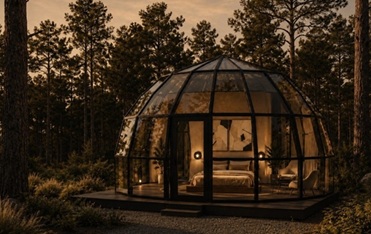
SOFIA, BULGARIA—Panoramic domes have become one of the most photographed guest units in hospitality. A room whose walls and roof are almost entirely glazed sells itself on a clear night. But the decisions that make such a unit comfortable, efficient and long-lived are made long before the first guest arrives, and most of them come down to three things: the glazing, the ventilation and how long the structure is meant to last.
This article sets out what operators should check at the planning stage, based on how these units behave across the seasons.
Start With the Glazing, Not the View
In a conventional room, windows are a small share of the envelope. In a glazed dome they are almost all of it, so the choice of glazing decides both the heating load in winter and the cooling load in summer.
Two numbers matter most.
The Ug value measures how much heat escapes through one square meter of glazing for every degree of difference between inside and outside. The lower it is, the better the unit holds its heat. For reference, a single pane is around 5.8 W/m²K and older air-filled double glazing around 2.8. A modern argon-filled double-glazed unit with a low-emissivity coating reaches about 1.0. Triple glazing goes further: Guardian’s SunGuard SuperNeutral SN 40/23, for example, is rated by the manufacturer at Ug 0.5 W/m²K in a 6-16-4-16-4 argon build. That is the glazing level used in passive houses, the strictest residential energy standard, and it halves the heat lost through the glazing compared with a good, double-glazed unit.
The solar factor (g-value) measures how much of the sun’s heat passes through. In a fully glazed room this is the number that prevents summer overheating. A selective solar-control coating can keep visible light relatively high while letting through only around a fifth of the solar energy. The same SN 40/23, in a triple unit, transmits about 37 percent of daylight and about 21 percent of solar heat.
The practical lesson is that one glazing specification does not suit every site. A unit facing south in a Mediterranean climate needs strong solar control. One facing north in Scandinavia benefits more from the lowest possible Ug value. Operators planning several units across different orientations should ask whether the glazing can be specified per site, and per unit if necessary.
The Inner Pane Decides How the Room Feels
Guests rarely talk about Ug values, but they notice the effects. When the inner pane is cold, people sitting near it feel the chill radiating from the surface even if the air temperature is fine. Cold inner surfaces also cause condensation on frosty mornings, which is the most common complaint about glazed guest units in winter.
Better glazing keeps the inner pane closer to room temperature. That is why the step from double to triple glazing is often felt more than it is measured: less cold radiation, fewer draughts along the surface and far less condensation. For units intended to operate through the winter, it is worth asking for the triple-glazed option even where it is not strictly required.
Ventilation is Part of the Energy Plan
Warm air rises, and in a dome it collects at the apex. In summer that layer of hot air is what makes a glazed unit uncomfortable by mid-afternoon; in every season, the moisture that guests produce by breathing, showering and cooking ends up there too.
Extracting air at the highest point solves both problems. An extract fan at the apex removes heat before it builds up and carries moisture out before it condenses on the glazing. Units with app-controlled ventilation allow staff to run it on a schedule or in response to conditions, rather than relying on guests to open doors and windows. Opening the door, of course, defeats the purpose of good glazing in winter.
When reviewing a design, operators should ask where the air is extracted, how it is controlled and whether the system can run while the unit is empty between stays.
Size the Heating for the Site, Not the Brochure
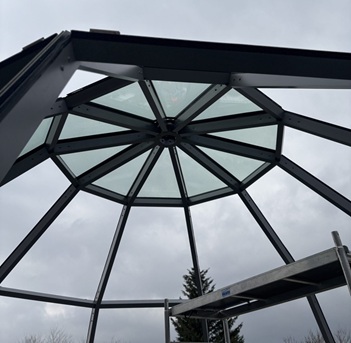
A glazed room behaves differently from a masonry one. On a sunny winter day, it can gather a great deal of heat from the sun, and the heating may stay off for hours. At night, with no solar gain and a large, glazed surface, it needs more heating power than an insulated room of the same size to hold the same temperature.
That is not a flaw; it is the trade-off of a room built for the view. But it means heating should be sized for the actual climate and orientation before the order is placed, not assumed from a standard specification. Better glazing reduces the night-time demand directly, which is another reason to consider triple glazing in colder regions.
Count the Years, Not Just the Cost
Sustainability in guest units is often discussed in terms of materials. Lifespan matters as much. A soft-shell or fabric dome is inexpensive to buy, but its cover is typically replaced every few years, and each replacement brings new material, transport and waste.
A glazed unit built on a façade-grade aluminum system is a different kind of asset. Aluminum does not rust, insulated glazing units carry CE marking under European standards, and the structure can be designed for a service life of 50 years or more. Spread over that lifetime, the embodied impact and the cost per night look very different from the purchase price alone.
Operators comparing options should ask for the expected service life of the structure and the glazing, the warranty on each, and the certificates of the materials used.
A Short Planning Checklist
Glazing: What are the Ug value and g-value? Can they be chosen per orientation and climate? Is triple glazing available?
Comfort: Will the inner pane stay warm enough to avoid condensation in your coldest month?
Ventilation: Where is air extracted, and how is it controlled?
Heating: Has it been sized for your site’s climate and orientation?
Lifespan: What is the design life of the structure and glazing, and what is under warranty?
Glazed domes can be among the most efficient and long-lived units on a site, or among the hardest to run. The difference is almost entirely in the planning.
Bozhidar Angelov is part of the team at SkyLodge, a European manufacturer of panoramic domes for glamping, hotels and wellness. More at skylodges.eu.