



In the built environment, walls have long been treated as passive backdrops—surfaces to decorate, protect, or brand. But a quiet transformation is underway. As designers, manufacturers, and clients increasingly prioritize human well-being alongside environmental performance, wallcovering is being reimagined as an active contributor to health. At the center of this shift is salutogenic design—an approach rooted in the idea that spaces should support our capacity to thrive, not merely reduce harm.
Originally developed by medical sociologist Aaron Antonovsky, salutogenesis reframes how we think about health. Instead of focusing on disease (a pathogenic model), it emphasizes the “origins of health”—the resources, conditions, and experiences that help people stay well. Its core concept, the Sense of Coherence (SOC), describes how individuals perceive life as comprehensible, manageable, and meaningful. When applied to interiors, this framework invites a powerful question: can something as ubiquitous as wallcoverings help people better understand, navigate, and feel connected to their environments?
Increasingly, the answer is yes.
Designing for Comprehensibility: Making Spaces Legible
One of the most immediate ways wallcoverings can support well-being is by enhancing comprehensibility—the sense that an environment is structured, predictable, and easy to interpret. In healthcare, education, and workplace settings, confusion and disorientation are major sources of stress. Thoughtful wallcovering design can reduce cognitive load and improve wayfinding.
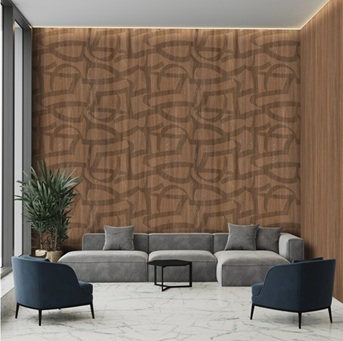 Consider large-scale patterns, like Costa or Solure, that subtly guide movement through a corridor, or color zoning systems embedded into digital wall graphics that help users intuitively distinguish between departments or functions. Advances in digital printing, paired working with our custom graphics team, allow for hyper-customized visuals that respond to specific spatial narratives, from pediatric hospitals that use storytelling murals to ease anxiety, to senior living environments where familiar textures and imagery reinforce memory and identity.
These are not merely aesthetic choices; they are cognitive tools. By helping users “read” a space more easily, wallcoverings can contribute to a baseline sense of clarity and control—key components of the salutogenic model.
Supporting Manageability: Materials That Work with Us
The second pillar of salutogenesis, manageability, relates to whether people feel equipped with the resources to meet life’s demands. In design terms, this extends to environments that reduce friction, enhance comfort, and support physical and emotional resilience.
Here, material innovation is driving meaningful change. High-performance wallcoverings are being engineered not just for durability, but for human-centered outcomes. Acoustic wall panels, and acoustic wall art, for instance, are increasingly integrated into decorative wall systems, helping to reduce noise pollution—a known stressor in offices, schools, and healthcare settings. By dampening ambient sound, these surfaces create calmer, more manageable environments.
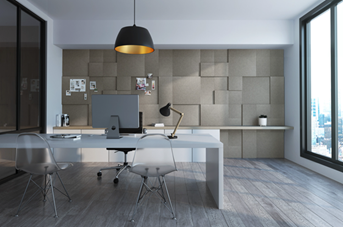 Perhaps most significantly, the industry is moving away from materials that harm less toward those that actively support more. PVC-free wallcoverings, bio-based polymers, and rapidly renewable fibers are gaining traction, not just for their reduced environmental footprint but for their alignment with human health.
These materials minimize off-gassing and contribute to healthier indoor ecosystems, reinforcing the idea that manageability includes both physical comfort and environmental safety.
Cultivating Meaningfulness: Emotional & Biophilic Connection
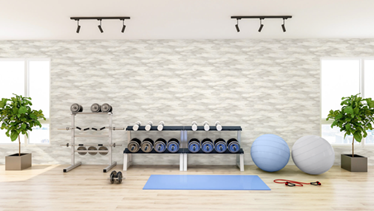
If comprehensibility helps us understand a space and manageability helps us function within it, meaningfulness is what makes us care. It is the emotional resonance that transforms a room into a place.
Wallcoverings are uniquely positioned to deliver this dimension of design. Through color, texture, imagery, and narrative, they can evoke memory, identity, and connection. This is especially evident in the rise of biophilic design—a movement that seeks to reconnect people with nature through the built environment.
Nature-inspired wallcoverings have evolved far beyond simple floral patterns. Today’s offerings include immersive forest panoramas, abstracted organic geometries, and even surfaces embedded with natural materials like cork, grasscloth, or wood fibers, like Arbor Wood veneer.
 Research continues to show that exposure to natural imagery and textures can reduce stress, improve mood, and enhance cognitive performance—outcomes that align directly with salutogenic goals.
But meaningfulness also extends beyond nature. Cultural storytelling, local artistry, and personalized graphics are becoming central to wallcovering design, particularly in hospitality and community spaces. By reflecting the identities and histories of the people who inhabit them, walls can foster a deeper sense of belonging and purpose.
Sustainability as a Salutogenic Imperative
It is impossible to separate salutogenic design from sustainability. After all, a system that supports human well-being must also support the ecological systems on which that well-being depends.
In the wallcoverings industry, this has led to a wave of innovation across the product lifecycle. Manufacturers are investing in closed-loop production systems, where materials can be reclaimed and reused at end of life. Water-based inks, low VOC adhesives, and energy-efficient manufacturing processes are becoming standard rather than exceptional.
Importantly, sustainability is no longer framed solely as a technical requirement. It is being integrated into the experience of design. Wallcoverings that visibly express their material origins—whether through natural fibers, recycled content, or artisanal processes—can reinforce users’ awareness of and connection to broader ecological systems. In this way, sustainability itself becomes part of the story a space tells, contributing to its overall sense of coherence.
Active Adaptation: Walls That Evolve
The final principle of salutogenesis—active adaptation—recognizes that health is not static. People and environments are in constant flux, and design must be able to respond.
Emerging technologies are beginning to bring this adaptability to wallcoverings. Modular systems allow for easy replacement or reconfiguration, extending product life and enabling spaces to evolve without major renovation. Writable and tackable surfaces, like Mag-Rite II and Tac-Wall, support collaboration and learning, particularly in educational and workplace settings.
 More experimental innovations include responsive materials that change color or opacity based on light, temperature, or user interaction. While still niche, these technologies point toward a future where walls are not fixed elements but dynamic participants in the environment—capable of responding to human needs in real time.
The Wall as a Wellness Interface
Taken together, these trends suggest a fundamental shift in how we understand wallcoverings. No longer just finishes, they are becoming interfaces—points of interaction between people and space that can either support or undermine well-being.
For designers and manufacturers, this presents both a challenge and an opportunity. It requires moving beyond compliance-driven thinking toward a more holistic, human-centered approach. It calls for collaboration across disciplines, from material science and psychology to graphic design and environmental engineering.
But the payoff is significant. By aligning wallcovering design with the principles of salutogenesis—comprehensibility, manageability, meaningfulness, and adaptability—we can create environments that do more than look good or perform well. We can create spaces that help people feel oriented, capable, connected, and resilient.
In a world where stress, uncertainty, and environmental pressures are only increasing, that is not a luxury. It is a necessity.
And it may start with something as simple—and as powerful—as the walls around us.
About Carri Kenney
Carri Kenney is a Senior Product Designer with more than 30 years of experience exclusively in the commercial and residential wallcovering industry. She brings a global perspective shaped by hands-on product development across manufacturing facilities in the United States, Canada, England, France, and New Zealand.
Earlier in her career, she spent 19 years with a residential wallpaper studio, where she led creative direction and product development across a wide range of styles and techniques in close collaboration with the owner and a creative team. She later continued this work with two additional wallpaper design studios before joining Koroseal, further expanding her versatility across design styles, printing methods, and material applications.
With a background in surface and graphic design, her work is rooted in a love of color, pattern, and texture. She approaches design as a form of visual problem-solving—aligning the right elements with the right space. She is especially drawn to work that feels both timeless and relevant, balancing creativity with the realities of how products are made and experienced. This perspective informs her approach to translating design vision from concept through production, ensuring each product is intentional, functional, and achievable within real-world manufacturing environments. She believes the most successful wallcovering emerges at the intersection of creativity, functionality, and production reality, where design is not only expressive but purposeful.