


INTERNATIONAL REPORT—During a family trip to Seychelles last February, I found myself standing in front of a hotel breakfast buffet that was as impressive as it was unsettling. Fresh fruit caught the light. Pastries were arranged with almost sculptural care. Everything looked generous, polished and inviting. Yet when service ended, the same display began to prompt a harder question: are hotel buffets still enhancing the guest experience in ways that justify the waste they often leave behind?
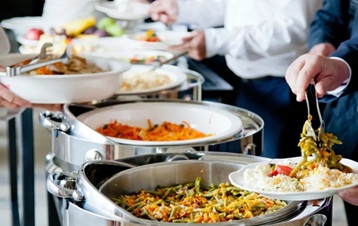
I do not think this is an argument for eliminating hotel buffets. In many properties, breakfast still plays a meaningful role in how guests judge value, quality and welcome. Leite-Pereira et al. (2022) suggest that breakfast can influence hotel selection, satisfaction and intention to return. That matters because breakfast is often one of the first lived moments of a stay. Before a guest has fully processed the room, the service rhythm or even the night’s sleep, breakfast may already be shaping the emotional tone of the experience.
That may help explain why the buffet remains so resilient. It offers freedom of choice, speed, visual richness and a sense of generosity. It can cater to families, international travelers and guests with different dietary preferences without creating too much friction. From an experience-management perspective, the buffet works because it communicates value almost instantly. It is not simply a food format. It is a visible performance of hospitality.
Why the Waste Question Can No Longer Sit Backstage
The difficulty is that this performance has a hidden cost. The United Nations Environment Program (2024) estimated that 19 percent of food available to consumers was wasted in 2022 across households, retail and food service, amounting to 1.052 billion tons globally. UNEP (2024) also notes that food loss and waste account for around 8 percent to 10 percent of global greenhouse gas emissions. Those figures make it increasingly difficult to treat buffet waste as a minor operational irritation. It is part of a much wider sustainability problem.
Hospitality research makes that concern more concrete. Filimonau and De Coteau (2019) argue that food waste in hospitality is not only an environmental issue but also a managerial and economic one, shaped by forecasting, service design and operational culture. In the specific context of breakfast service, Juvan et al. (2018) show that guests at hotel breakfast buffets often take more food than they consume, creating avoidable plate waste and unnecessary cost. This does not mean that every buffet is inherently wasteful, but it does suggest that the buffet format can encourage over-selection unless it is very carefully managed.
That point matters because hotels have often treated visible abundance as evidence of quality. Yet abundance and excellence are not the same thing. Guests may value variety, freshness and ease, but they do not need predictable overproduction to feel cared for. Once a buffet depends on excess to look impressive, the experience begins to crack at the edges. What initially feels generous can start to look inefficient, and perhaps even out of step with what responsible hospitality should now represent.
From Theatrical Abundance to Intelligent Abundance
This, to my mind, is the central challenge. The sector does not need to choose between delight and discipline. It needs to move from theatrical abundance to intelligent abundance. That means preserving the pleasure of breakfast while redesigning the conditions that quietly generate waste. The literature suggests that this is possible. Dolnicar et al. (2020) found that a game-based intervention reduced family plate waste at hotel buffets without reducing guest satisfaction. The lesson is not that one intervention solves the whole problem. It is that waste is not inevitable, and that thoughtful design can reduce it without destroying the experience.
In practice, intelligent abundance means smaller-batch replenishment, tighter forecasting, more selective curation and a sharper distinction between what looks impressive and what genuinely adds value. A buffet does not become better because it offers more of everything. In many cases, it becomes better when choice is edited more carefully, replenishment is more disciplined, and freshness is made more visible than sheer volume.
Why Guest Awareness Matters Too
Another part of this discussion deserves more attention: guest awareness. Buffet waste is not shaped only by kitchen forecasting, portioning or display volume. It is also influenced by what guests notice at the point of choice and by how the hotel frames responsible consumption. Antonschmidt and Lund-Durlacher (2021) found that communication tools in a holiday hotel buffet context reduced edible plate waste, with guest tables emerging as a particularly important contact point. Cozzio et al. (2021) similarly suggest that persuasive messages can help when they invite participation rather than delivering flat moral instruction.
This is where some hotels may need a change of tone. Guests do not need to be lectured. They do need to be invited into a more conscious experience. If hotels make the hidden cost of excess visible in a tactful way, they may begin to reshape behavior without draining the pleasure from breakfast itself. That is not a minor point. It suggests that buffet waste is not only an operational problem. It is also an experience-design problem. The way abundance is staged influences what guests take, what they leave behind, and what they come to see as normal.
What This Means for Hotel Managers
For hotel operators, the implication is not that buffets should disappear. It is that they should be managed with more precision and more honesty about the relationship between abundance and waste. Four practical shifts seem especially relevant.
Edit choice more carefully. A longer buffet is not automatically a better buffet. Properties may need to identify which items genuinely enhance perceived value and which simply inflate volume.
Replenish in smaller waves. Smaller-batch production can help preserve visual appeal while reducing the amount of food that is prepared too early or left untouched at the end of service.
Measure waste, not just output. Hotels often track covers, food cost and guest satisfaction. Waste itself should also be treated as a core management metric.
Use guest-facing communication with tact. Light-touch prompts, participatory cues and carefully placed information may support more conscious consumption, especially when they reinforce quality and care rather than guilt.
None of these shifts is especially glamorous. But that may be exactly the point. Good hospitality has always depended on what happens backstage as much as on what the guest sees frontstage. The buffet that deserves to survive is not the biggest one. It is the one that offers pleasure, communicates quality and does not rely on predictable waste to perform generosity.
So, what are hotel buffets really serving? At their best, they still serve welcome, ease and enjoyment. At their worst, they serve an outdated idea of value in which excess is mistaken for care. The sector does not need to abandon the buffet. It needs to mature it.