


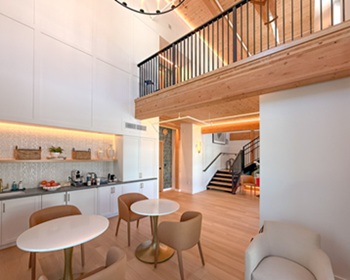
When I think about hospitality, the first thing that comes to mind is Southern hospitality, that sense of warmth, welcome, and home. It’s the feeling of being cared for. Webster’s Dictionary defines hospitality as “the friendly and generous reception and entertainment of guests, visitors, or strangers.”
But hospitality carries a dual meaning. On one hand, it represents a vast global industry. The hotels, resorts, restaurants, and destinations that shape our experiences of comfort and escape. On the other, it embodies an ethos of care, generosity, and connection. Hospitality is an act of making others feel seen and supported.
Traditional hospitality, built for comfort and convenience, often comes at a hidden cost. Many industry practices have proven environmentally harmful or disconnected from the local communities they claim to celebrate. Recognizing this, a new concept has been emerging. Regenerative hospitality is a model that gives back more than it takes ecologically, socially, and culturally. It challenges designers and operators alike to imagine spaces that restore ecosystems, strengthen communities, and nurture a deeper relationship between guests and place.
Hospitality’s Sustainability Challenges
The hospitality industry operates behind the scenes with immense resource intensity. Water, energy, carbon, and food waste are only part of the picture. Every guest experience is supported by layers of high-consumption systems that remain largely invisible. From sprawling resorts to theme parks, these environments are often high-carbon and high-maintenance by design.
Aesthetically, the industry is driven by trends. Spaces are constantly refreshed to stay “on brand,” leading to a cycle of material replacement and waste: architectural elements and finishes are often replaced every 12 to 15 years, while furniture and soft surfaces turn over every seven. This accelerated rhythm means more materials are sent to landfills long before their useful life ends.
Consider the lifespan of a hotel corridor. As the start of the design process, designers often select materials for their durability, ability to conceal wear and tear, and alignment with the overall aesthetic. But the impact of those materials extends well beyond the product itself. During installation, for example, adhesives can contain high levels of volatile organic compounds (VOCs) that are released into the air and affect both indoor air quality and human health, not only for the installers, but also future occupants. As designers specify products, it’s important to consider not only what material is made of, but also the products and process required to get it to its final state.
Once installed, the material enters the next stage of its lifespan. In this example, keeping a hotel corridor up to standard requires everything from vacuuming to spot cleaning, each carrying impacts related to energy, water use, wastewater, and cleaning products. Fortunately, material manufacturing and maintenance practices have evolved considerably. Engaging material representatives early in the design process can provide valuable insight into best practices that extend a product’s useful life while reducing the impact of its upkeep on people, spaces and the environment. If we want to change that typical 12- to 15-year cycle of changing materials, keeping these factors in mind as we design will start to shift the needle in a positive way.
Beyond the environmental toll, hospitality design often gravitates toward standardized aesthetics. When every resort or café looks the same, spaces lose connection to their local culture and ecology. Generic luxury replaces authenticity, leaving guests unanchored from a sense of place.
Guest participation in sustainability—like reusing towels or skipping housekeeping—helps, but it’s superficial. Real change requires systemic shifts in design, construction, and operation. Rather than asking guests to do less, hospitality can engage them to understand more, to appreciate the value of resources, the story of a place, and the people who sustain it.
Ultimately, the industry’s challenge is to balance comfort, beauty, and efficiency with accountability, longevity, and regeneration. The very spaces designed for escape must begin to model resilience and responsibility.
Rethinking Hospitality Typologies
Hospitality traditionally refers to places of service and leisure, such as spas, hotels, resorts, restaurants, and bars. But what if hospitality could be redefined? What if it wasn’t limited to destinations, but extended into everyday life as an ethic of care and connection?
We’re already seeing hints of this shift in workplaces that incorporate restorative zones, natural light, and shared areas for collaboration. These design choices signal a growing recognition that well-being and human connection are central to performance and fulfillment.
Now imagine extending this ethos to the public realm. What if neighborhoods integrated hospitality through mutual-aid stations, community gardens, shaded seating, or accessible water fountains? These small spaces of care and belonging can create environments that nurture people daily, not just when they travel.
In this broader view, hospitality becomes a principle of design for care rather than an indulgence. Whether it’s a hotel lobby or a park bench, the goal is the same: creating places that make people feel supported and connected. This reimagined typology expands hospitality’s reach beyond tourism into the design of community itself.
A Framework for Regenerative Hospitality Design
While hospitality faces undeniable sustainability challenges, it also has immense potential to drive positive change. To realize this potential, the industry must move beyond short-lived trends and embrace design for longevity, adaptability, and regeneration. A regenerative framework for hospitality design might include:
- Climate-adaptive, modular building systems: Spaces should be flexible enough to respond to changing environmental conditions and community needs. A resort’s conference center today could serve as a cultural hall tomorrow.
- Engagement with local craft and community: By collaborating with regional artisans and storytellers, hospitality becomes a platform for cultural expression rather than extraction. Spaces shaped through community input are more authentic and enduring.
- Purpose-driven brands: Design and operations should center stewardship of place, embodying ecological and cultural resilience. Practices like zero-waste dining, conservation tourism, and hyper-local sourcing reconnect guests to the systems that sustain them.
- Timeless design strategy: Avoiding trend-driven turnover reduces waste and reinforces a deeper emotional connection to place. Timelessness doesn’t mean static design. It means creating environments that age gracefully, evolve meaningfully, and remain relevant over decades.
At its best, regenerative hospitality reframes the guest experience as an active relationship between people and place. It transforms the industry from one of passive consumption to one of co-creation, where the guest, host, and environment all benefit.
Looking Ahead: The Future of Hospitality
The next era of hospitality will be defined not by extravagance, but by regeneration. We are moving:
- From extractive to regenerative, with carbon-positive buildings, circular material systems, and food-forest resorts.
- From host vs. guest to co-creation, where community-run stays and cultural exchange platforms blur traditional boundaries.
- From experience-driven to impact-driven, where hospitality becomes a tool for rewilding, re-rooting, and reconnecting.
- Toward hospitality as education, teaching guests how to live both well and lightly.
Yes, hospitality is an industry. But it’s also a design language for how we care for one another and our environments. The goal is no longer to simply entertain the guest, but to regenerate the host environment.
The future of hospitality lies as much in the grand hotels of tomorrow as it does in the small, daily actions of care and connection we create in our own communities. When we expand hospitality from a service to a shared ethic, we move closer to a world where every space—built or natural—becomes a place of welcome, reciprocity, and renewal.
Author Bio
Molly Polehna, LID-FL, NCIDQ is a commercial interior designer at Little Diversified Architectural Consulting in Charlotte, N.C., focused on regenerative design and the creation of immersive environments. With a diverse portfolio that spans education, hospitality, and workplace projects, the core of Molly’s work is a belief that interiors have the power to shape how people feel, work, and connect. With a strong focus on sustainability and place-making, she designs environments that foster well-being, creativity, and community.