


At Boutique Design New York in November, I was introduced to Nextac, “the next evolution in PTAC and VTAC technology.” It was the Nextac PTAC unit that caught my eye primarily because of its size. It protrudes only 6 inches from the wall compared to a traditional PTAC with a 12-inch protrusion. According to Ephoca, the maker of Nextac PTACs/VTACs, its PTACs uses 75 percent less power while recovering up to 80 percent of exhaust heat. Nextac units were designed to reduce carbon emissions and meet evolving regulations.
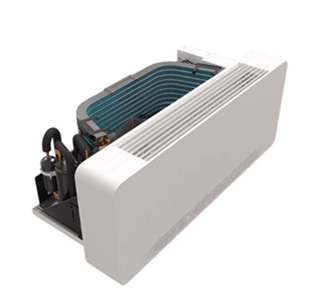
ThermaSleeve insulation prevents air leakage to boost performance and lower energy costs. Self-cleaning coils minimize maintenance while preserving peak efficiency.
Nextac PTACs/VTACs operate down to -10°F, delivering reliable heat in extreme cold without supplemental electric resistance heaters. Nextac PTACs/VTACs use R-32 refrigerant, which has a low global warming potential to cut your carbon footprint.
Nextac PTACS include MERV 13 filtration and are as quiet as 27db compared to 60 db in most PTACs you will find today. Whereas your typical PTAC requires a condensate drain, with the Nextac units a nebulizer pump sprays condensate to the outside.
PTAC as Design Element?
If you have never considered a PTAC a design element in the room, now you can. The sleek metal casing is paintable.
For its efforts, Nextac was chosen as the 2024 AHR Product of the year. It has 61 patent-pending innovations.
Nextac PTACs are made in Italy. The corporate headquarters is in Cleveland, Ohio. There is a showroom in New York City.
Click here to see examples of properties already using Nextac PTACs/VTACs. They include The Gotham Hotel in New York City and the Romer House Waikiki Hotel.
It is great to see yet another company entering the industry to raise the bar in heating/cooling efficiency.