


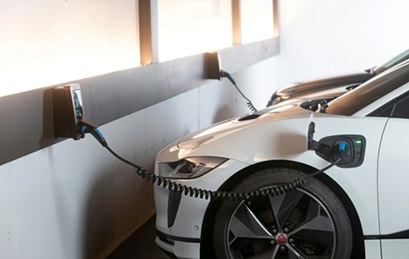
 NATIONAL REPORT—A quiet but significant shift is reshaping the commercial and multifamily property landscape: EV charging is no longer optional in new construction. As of January 2026, California’s updated building code requires every new multifamily building to be 100 percent EV ready. And California, as it often does with building standards, is setting the template that other states are beginning to follow.
What the New Codes Require
Under California’s 2026 Title 24 building code, any building permit application submitted after January 1, 2026, must comply with mandatory EV infrastructure requirements. For multifamily buildings with assigned parking, at least one Level 2 EV charging receptacle per unit is required. Buildings with shared or unassigned parking must install charging receptacles at every parking spot.
The codes also include practical flexibility. Power-sharing and automatic load management systems are permitted, allowing multiple charging stations to operate efficiently even when a building’s electrical supply is limited. Each unit must receive a minimum of 3.3 kilowatts simultaneously, which is enough for a meaningful overnight charge.
Importantly, these rules don’t just apply to brand-new buildings. Any time a parking space is added or altered in a way that triggers a building permit, that space must meet the new EV-ready standard.
Why This Matters Beyond California
Several other states and municipalities are adopting or considering similar EV-ready building codes. Colorado, New York, Washington, and Oregon have all moved toward requiring EV infrastructure in new construction. For property owners and developers operating in multiple markets, getting ahead of these requirements now avoids costly retrofits later.
From a market perspective, the trend makes sense. EV adoption continues to grow even amid short-term fluctuations, and tenants increasingly expect charging access. A 2025 survey found that more than half of apartment renters said access to EV charging would influence their choice of where to live.
The Cost of Waiting
Retrofitting an existing building for EV charging is significantly more expensive than building the infrastructure in from the start. Running electrical conduit, upgrading panels, and trenching through finished parking structures can cost three to five times more than integrating EV-ready wiring during initial construction. Even if you’re not required to comply today, planning for EV infrastructure now protects the long-term value of your property.
Smart Solutions for Property Owners
The good news is that modern EV charging solutions are designed to work within real-world constraints. Load management systems allow properties to serve many vehicles without massive electrical upgrades. Charging-as-a-Service models reduce upfront capital requirements. And strategic charger placement can enhance the tenant experience without disrupting existing parking operations.
At ACS, we specialize in designing EV charging solutions that fit each property’s unique needs. Whether you’re planning new construction or upgrading an existing building, our team handles everything from electrical load calculations and permit acquisition to installation and ongoing support.
Planning a new build or renovation? Let ACS help you get EV-ready the right way. Contact us for a free site assessment. Call (480) 581-5115 or e-mail Sales@ACSgo.net.