


Air Quality
Home Air Quality
 Allergy friendly rooms, air purifiers, smoke-free hotels, chemical sensitivities, volatile organic compounds. As travelers and workers demand clean air and a healthy environment to work and sleep in, hotels are finding new and innovative ways to provide it, and getting a marketing kick to boot. Got news or a story idea to share? Contact Glenn Hasek, editor, at (813) 510-3868, or by e-mail at: greenlodgingnews@gmail.com.
The Importance of Regular Duct Cleaning for Owners of Lodging Facilities
Ensuring the pristine air quality within your lodging facility is not just a matter of comfort; it’s integral to your business success. Satisfied guests not only return but also become your most effective marketers, spreading positive word-of-mouth about their experience. By demonstrating your commitment to maintaining clean air, especially in regions with elevated air pollution levels, you can gain a significant edge over your competitors.
Managing dust and promptly changing filters constitute critical initial steps. Despite the best efforts of your cleaning staff, areas like laundry facilities can be significant sources of dust accumulation. If your facility has recently undergone...
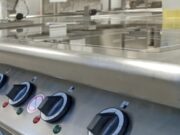
Chef Christopher Galarza on the Electrification & Decarbonization of the Commercial Kitchen
VERONA, PA.—The electrification and decarbonization of the commercial kitchen is becoming a hot topic throughout the hospitality industry. Green Lodging News recently addressed the topic in a Publisher’s Point of View column which highlighted the work of the William J. Worthen Foundation. The Foundation addresses all-electric kitchens in its “The Building Decarbonization Practice Guide.” Also championing a transition to all-electric and less carbon-intensive kitchens is Chef Christopher A. Galarza. A strong proponent of electric induction cooking, he is the author of Understanding the Green Industrial Revolution, An Interdisciplinary Look At the Hospitality Industry, Founder/Culinary Sustainability Consultant with Forward Dining...

Fellowes to Showcase ARRAY Air Quality System at CMPX 2024
ITASCA, ILL.—Fellowes, a global leader and trusted partner that provides product solutions to fulfill a broad range of WorkLife needs, will showcase the breakthrough Array networked air quality system and the innovative AeraMax Pro commercial air purifiers at CMPX 2024, Booth 1939, at the Metro Toronto Convention Center (MTCC), South Building, March 20 to 22, 2024.
Fellowes Array is a breakthrough solution that uses proprietary technology to combine the benefits of H13 True HEPA filtration, a full suite of indoor air quality sensors and monitoring with real-time data to monitor, track, and improve building-wide air.
While most HVAC systems aim to...
New Jersey Bill Could Eliminate Smoking in Atlantic City Casinos
A measure that would prohibit smoking in Atlantic City’s casinos—Bill A2143—moved forward late last month. The New Jersey Senate health committee approved a long-delayed bill to impose the smoking ban. The approval is the first step in several necessary approvals. While some business leaders and casino workers expressed disapproval of the ban, many casino workers were elated.
Casinos were specifically exempted from New Jersey’s 2006 law that banned smoking in virtually all other workplaces.
Smoking is currently permitted on 25 percent of the casino floors in Atlantic City. While smoking areas are set aside for smokers, the smoke drifts into most...
Bentley Mills: All Carpet Products Now Carry Declare Labels
LOS ANGELES—Bentley Mills, Inc. continues to raise the bar on sustainable design and manufacturing transparency, announcing that all carpet products manufactured by Bentley carry Declare labels and have achieved third-party verified LBC Red List Free status through the Living Building Challenge (LBC), one of the world’s highest performance standards for healthy buildings. LBC Red List Free products disclose 100 percent of ingredients to 100 ppm and do not contain any Red List chemicals of concern.
“We choose to manufacture in California where some of the most rigorous environmental legislation in the country is adopted, setting Bentley apart from others in our industry. All...

A Very Helpful Resource for Going Full on Electric in the Kitchen
One of the hottest topics in foodservice is the electrification of the kitchen and there are numerous organized and even legislative efforts to push businesses to go all-electric and eliminate natural gas. The aim is to decarbonize food and beverage operations.
To help guide hoteliers, restaurateurs and others toward all-electric kitchens, the William J. Worthen Foundation included a very helpful volume (volume 5) in its “The Building Decarbonization Practice Guide.” The volume title: All-Electric Kitchens: Residential and Commercial, 2nd edition. I highly recommend reading through this section. It builds a very strong case for eliminating natural gas.
“Kitchens present superb opportunities...

Three Families Sue Branson Luxury Hotel After Pool Chemicals Cause Serious Injuries
BRANSON, MO.—Three Jefferson County, Missouri, families are suing Grand Plaza Hotel in Branson, claiming the luxury hotel negligently shocked the pool, a process where strong chemicals like chlorine are used to destroy contaminants, two times while kids and adults were swimming in it. The incident transpired over Mother’s Day weekend in May 2021 when a hotel employee used a commercial-grade pool cleaner with a warning on the label: “no one can be in the pool when chemicals are being added directly to the pool,” according to the complaint. The suit states that because of the hotel’s safety failures, several children required medical attention,...
Excel Dryer Partnership Results in Hand Dryers with Customized Artwork
EAST LONGMEADOW, MASS.—Artists For Humanity (AFH), whose 23,500-square-foot Epicenter is Boston’s first LEED Platinum certified building, has combined its commitment to sustainability with its dedication to art and design—and ensured neither stops outside the restroom doors. The organization provides Boston teens with opportunities for creative expression, mentorship, and paid work experience on an array of client art and design projects, all while they prepare for college and their careers. Now, thanks to a partnership with Excel Dryer, AFH has installed first-of-their-kind XLERATOR Hand Dryers customized with artwork designed by local teens in its facility bathrooms.
“When we learned about the amazing work AFH was doing,...
Fellowes to Showcase ARRAY Air Quality System at AHR EXPO
ITASCA, ILL.—Fellowes will showcase its revolutionary Array networked air quality system at AHR Expo 2024, in Chicago, January 22 to 24, continuing its century-long tradition of delivering innovative home, workplace, and smart technology to fulfill WorkLife needs. Array is the first system of its kind, where networked air purifiers work alongside commercial HVAC systems to improve indoor air quality faster and more efficiently than ever before.
Array is a breakthrough solution that uses proprietary technology to combine the benefits of H13 True HEPA filtration, a full suite of indoor air quality sensors and monitoring with real-time data to monitor, track,...

Hotel Havens: A Guide to Pool & Spa Safety
Many people look forward to dreamy hotel pools and spas to destress and relax while on vacation. In the winter, hot tubs and spas can be a great attractor for guests looking for a chilly weather escape; however, they can also be a risk to visitors and pool and spa managers if not properly handled.
These much-beloved amenities can be breeding grounds for bacteria like E. coli, giardia, and algae, making using pool and spa chemicals, including salt, imperative. If these chemicals are mishandled, they can cause respiratory problems, chemical burns, and eye irritation. Managers of these amenities must be...